Recognizing the adverse impact of diffuse pollution on the Baltic Sea ecosystem, researchers from the WSBI are participating in a project aimed at reducing nutrient runoff. We invite you to learn about the latest project developments!
A Visit to the Island of Utö, Sweden
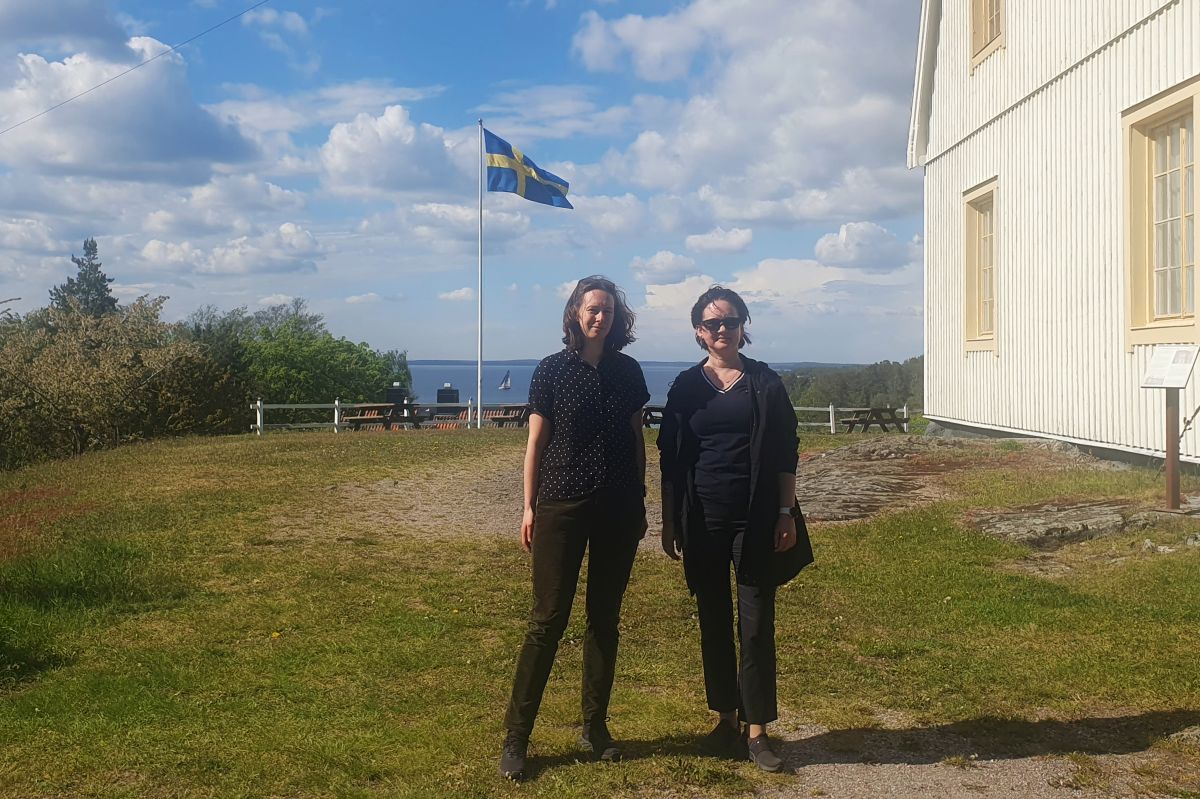
In May of this year, a meeting of project partners took place in Sweden. On this occasion, the guests were hosted by the association *Initiativ Utö*, which develops environmental solutions on the island of Utö in the Stockholm Archipelago, in collaboration with the KTH Royal Institute of Technology. During the event, we visited the Swedish partners’ pilot site, where a system of artificial wetlands has been established within a forest. This system helps retain precipitation and regulate water levels on the island — a function that is particularly important during dry periods. The implemented solution also helps sustain fish populations in the coastal waters.
More about the pilot area on Uto Island: Restoring Water Balance on Utö – A Pilot Area for Smarter Water Management – Central Baltic
Pilot Plant for Nitrogen Recovery Installed in Liepāja
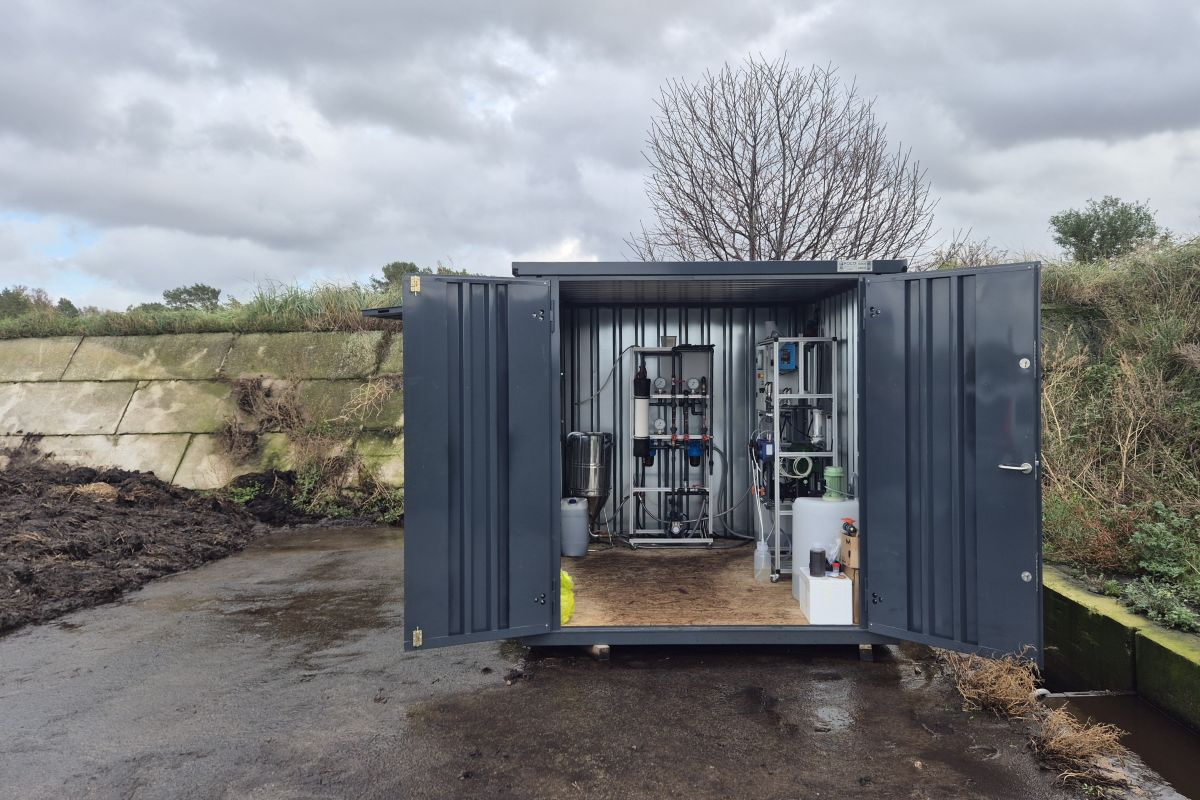
This summer, a pilot plant designed to recover nitrogen from the leachate of composted sewage sludge was installed at the Liepāja wastewater treatment facility. The operating principle of the pilot plant is the conversion of nitrogen compounds in the infiltrate into gaseous ammonia, which easily passes through the selective membrane. The separated ammonia then enters an acidic environment, where it forms ammonium sulfate —a substance known for its use as a fertilizer. We have begun testing the unit under various conditions, such as at different ammonium nitrogen concentrations. These field experiments will assist researchers from the WSBI in developing recommendations for the operation of the system.
More about the implemented solution: Reducing nitrogen input to the Baltic Sea: The circular economy approach taken by Liepāja – Central Baltic
Project Partners Visit Liepāja
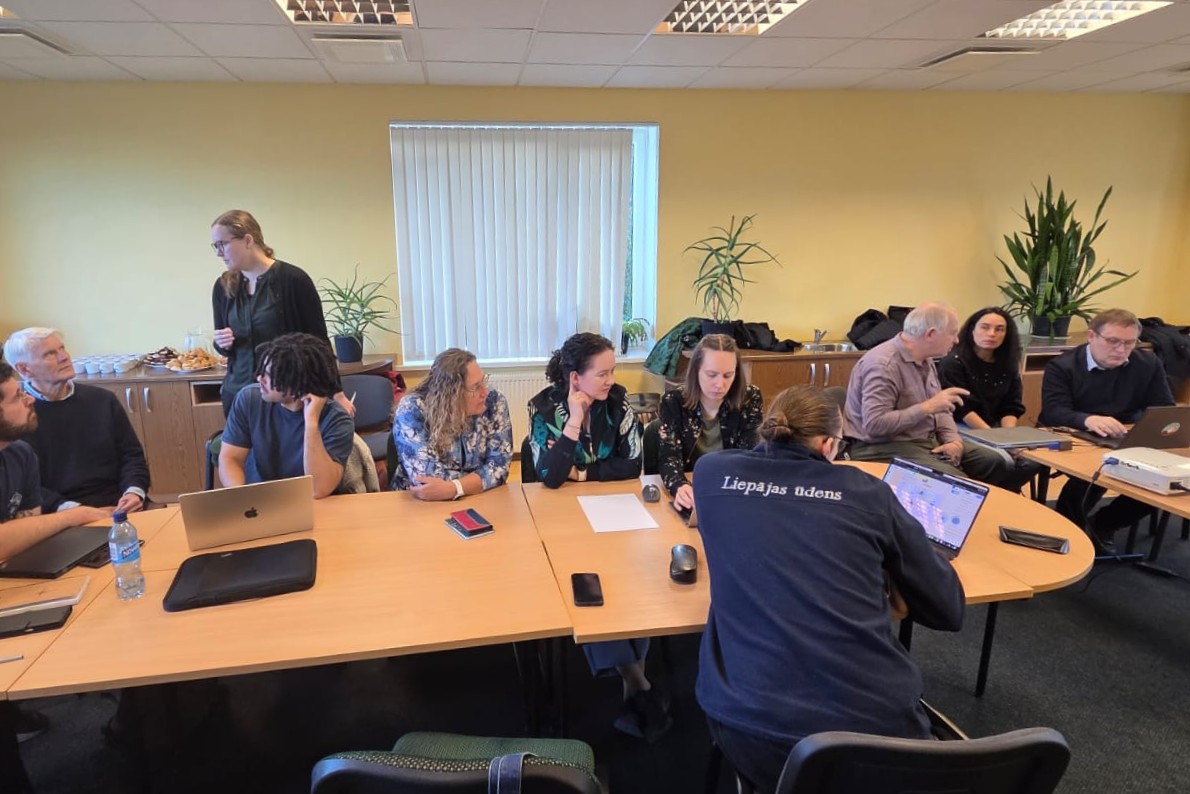
In late October, WSSP project partners from Estonia, Finland, and Sweden arrived in Latvia for a meeting. We spent the first day in Riga, visiting the laboratories of the RTU Water WSBI and developing plans for future cooperation. Afterward, we traveled to Liepāja, where, at the premises of “Liepājas ūdens,” we worked together on the development of a digital tool for reducing pollution. To conclude the visit, we toured the “Liepājas ūdens” sludge composting site, which features a pilot plant for leachate treatment.
The website dedicated to the Interreg Central Baltic programme project “WaterShed Safety Plan” (WSSP) can be found here:: https://centralbaltic.eu/project/wssp/
The project is co-financed by the European Union, its total budget is 2.6 million EUR, the implementation period is 01.05.2024–01.10.2027.
#Interreg #InterregCentralBaltic #WSSP